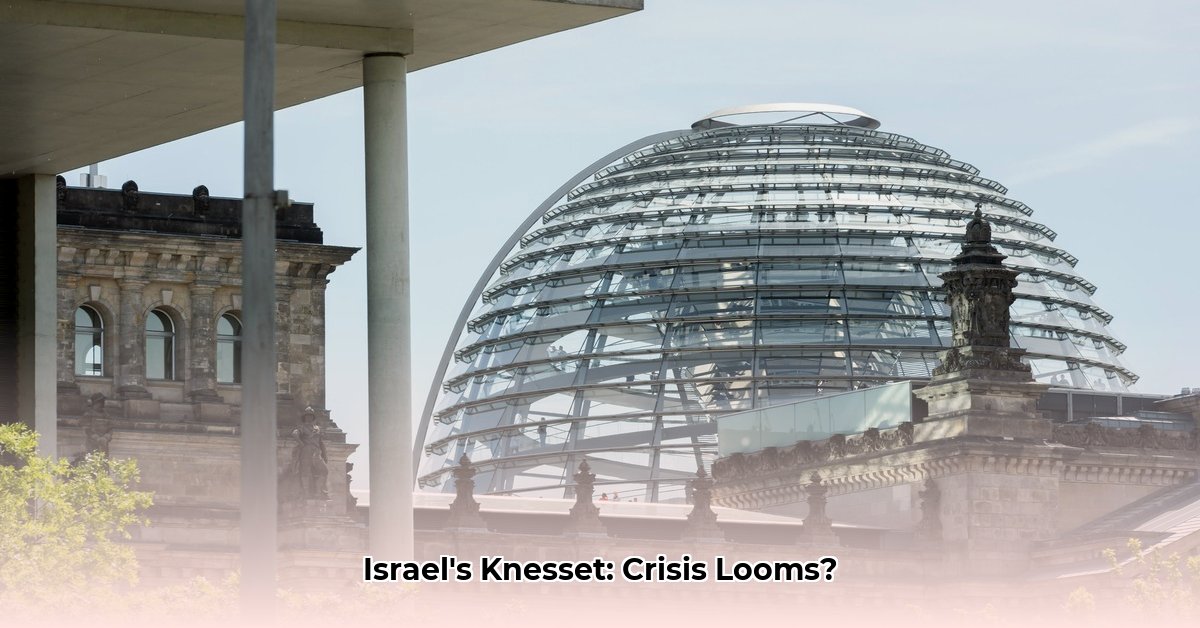
The Israeli Knesset, the country's parliament, is a fascinating – and often frustrating – case study in parliamentary democracy. Its unique system of proportional representation and a remarkably low electoral threshold leads to a chronically fragmented political landscape, resulting in coalition governments that are frequently unstable and short-lived. This inherent instability has profound implications for Israeli governance, impacting policymaking, public trust, and the country's international standing. Understanding the Knesset's dynamics requires delving into its history, the complexities of its multi-party system, and the external factors that shape its trajectory.
The Proportional Representation Puzzle: A Recipe for Instability
Israel's use of proportional representation (PR), where the number of seats a party receives directly reflects its share of the national vote, might seem inherently democratic. However, coupled with a low electoral threshold – the minimum percentage of votes needed to gain parliamentary representation – this system has created a near-permanent state of political flux. Smaller parties, often representing niche interests or specific demographics, can easily secure seats, making coalition-building a Herculean task. Professor Avi Shlaim, Emeritus Professor of International Relations at St Antony's College, Oxford, noted, "The low threshold... has created a highly fragmented political system that is extremely difficult to govern." This fragmentation is akin to constructing a sandcastle during a gale-force wind; the structure, however carefully built, is consistently under threat. Isn't it time we investigated alternatives?
The Never-Ending Dance: Coalition Governments and their Challenges
Since no single party typically wins an outright majority, coalition governments are the norm. This necessitates a prolonged and often tortuous process of negotiation and compromise amongst parties with vastly different ideologies and agendas. The formation of such governments resembles a delicate dance, often resulting in unstable alliances. These coalitions frequently collapse, leading to snap elections and a cycle of political instability. How many times has Israel been through this, and what is the ultimate cost in terms of national goals?
Meet the Players: Navigating Israel’s Diverse Political Landscape
Israel's political spectrum is broad and diverse, encompassing parties ranging from the far-right religious nationalist parties to left-wing secular and social democratic parties, with centrist parties often holding the balance of power. Arab parties, representing the Arab-Israeli population, also play a significant role. The alliances between these parties are fluid and often unpredictable, influenced by short-term political gains and the personalities of key players. The complexity of this landscape is best illustrated by considering recent coalition negotiations, which frequently involved intricate backroom deals and unexpected shifts in alliances.
The Fallout: How Instability Impacts Governance
The constant churn of coalition governments has profound consequences. Long-term policy planning becomes extremely difficult, as legislative agendas are subject to the whims of shifting political alliances. Public trust erodes as governments fall, and the resulting political paralysis can negatively impact economic growth and deter foreign investment. This inherent lack of stability affects the implementation of policies and the confidence of the Israeli population – is there a better way?
Beyond the Knesset: External Influences at Play
The Knesset's internal dynamics are inextricably linked to external factors. The ongoing Israeli-Palestinian conflict, regional geopolitical tensions, and deep socio-cultural divides within Israeli society (religious vs. secular, for example) significantly influence coalition formation and government stability. These external pressures add another layer of complexity to the already volatile political landscape. Could these external factors be better managed to foster greater stability?
The Future of the Knesset: Pathways to Reform?
The question of electoral reform is constantly debated. Some argue that the current PR system, while promoting inclusivity, ultimately hinders effective governance. Proposals for alternative systems, such as a mixed-member proportional system, have been suggested to foster greater stability. However, achieving consensus on such fundamental changes within the existing fragmented Knesset remains a significant challenge.
Conclusion: A Complex and Evolving System
The Israeli Knesset presents a unique and complex case study in parliamentary governance. Its proportional representation system, while representative of Israel's diverse population, has unintended consequences, leading to instability and hindering effective policymaking. Understanding this inherent instability is crucial to grasping the realities of Israeli politics. The ongoing debate surrounding electoral reform highlights the need for finding a balance between representation and effective governance, a challenge that will likely shape Israel's political future for years to come.